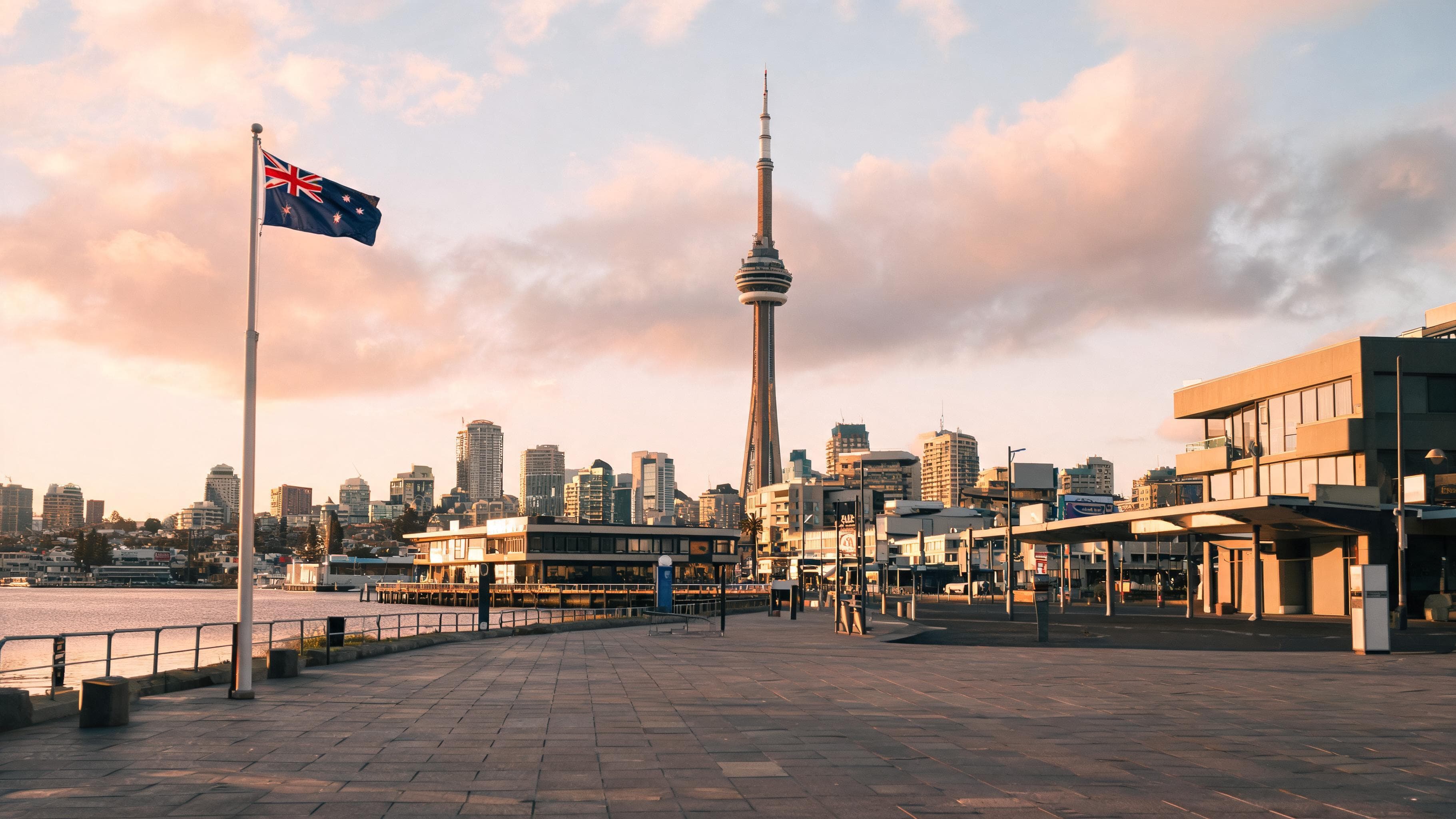
A budget with less room than usual
New Zealand's government is drafting a budget that commentators, including analysis from The Conversation, describe bluntly as tight. The question on the table is not whether there's enough money for everything, there clearly isn't, but whether the limited funds available get directed to where need is most acute (health waiting lists, housing shortages, infrastructure backlogs) or toward priorities set by whoever holds power at the time. That's not a partisan observation, it's the structural tension every finance ministry faces when revenue growth slows and spending demands don't.
At the same time, economist Bernard Hickey has been asking a sharper question in The Kākā: could New Zealand have avoided what he calls the "Trump spike", a jump in local financial conditions that traces back, at least in part, to shifts in US trade and economic policy. Put those two stories side by side and you get the real picture facing anyone thinking about a move to New Zealand in the next year: a government with less fiscal slack, operating in a world where decisions made in Washington still ripple through New Zealand mortgage rates.

Two ways to read the "Trump spike"
The term itself, coined in the local commentary rather than by any official body, points to a period where New Zealand's borrowing costs or currency moved sharply in response to US policy signals. There are two reasonable ways to interpret why that happened, and they don't fully agree with each other.
The first reading treats this as simple exposure. New Zealand is a small, open economy that borrows in global markets and trades heavily with partners whose fortunes are tied to the United States. When US policy, tariffs, fiscal stimulus, or interest rate expectations shift, capital reprices risk everywhere, including in Wellington and Auckland. Under this view, the spike wasn't a New Zealand failure, it was the cost of being a small country plugged into a large financial system. Nothing short of financial isolation, which nobody is proposing, would have fully avoided it.
The second reading, which is closer to what Hickey's framing suggests, is that some of the damage was avoidable through domestic choices: how much debt was hedged against currency swings, how the central bank communicated its own path, how fiscal policy either amplified or absorbed the external shock. If that's right, then the spike wasn't purely imported, it was partly the product of local decisions about risk management made before the shock hit.
My reading is that both are probably true to different degrees, and the exact split matters less to a prospective migrant than the practical result: borrowing costs in New Zealand have been more volatile than domestic conditions alone would explain, and that volatility feeds directly into mortgage rates, rents (via landlord financing costs) and the exchange rate you'd use to bring savings into the country.

Why the US economy's strength cuts both ways
The backdrop to all this is an American economy that, according to the Federal Reserve's own Beige Book, is increasingly leaning on one specific engine: the buildout of AI data centers. The Fed's regional survey ties a meaningful share of current US growth to this construction and investment wave, a point echoed in editorial commentary describing America's economy as a "remarkable machine" still running hot despite higher rates.
For New Zealand, a strong US economy is generally good news in the aggregate, it supports global demand, keeps commodity and dairy export markets healthier, and tends to support risk appetite in markets that New Zealand's pension funds and banks rely on for funding. But a US economy whose growth is concentrated in one capital-intensive sector, data centers built to run artificial intelligence models, also means US interest rate policy is being set with reference to a boom that has little to do with New Zealand's own conditions. When the Fed moves in response to AI-driven US growth, New Zealand's central bank, the Reserve Bank of New Zealand, doesn't get a vote, but it does feel the consequences through the exchange rate and offshore borrowing costs for local banks.
BlackRock's latest weekly market commentary, part of the steady drumbeat of institutional analysis tracking these dynamics, is a reminder that professional investors are watching this US-to-rest-of-world transmission closely. That's worth knowing if you're planning to bring savings into New Zealand: the NZD/USD rate over the coming months will be shaped as much by what happens in US data center financing as by anything happening in Wellington.
What this means if you're planning the move
For renters and buyers
If borrowing costs stay elevated because of imported volatility rather than purely domestic inflation, mortgage rates for anyone buying property in Auckland, Wellington or Christchurch will likely stay higher for longer than domestic conditions alone would justify. That matters for the rent-versus-buy calculation many new arrivals face in their first year.
For the exchange rate on your savings
A volatile NZD means the timing of converting foreign savings into New Zealand dollars can materially change how far your money stretches on a deposit or first year of rent. There's no way to predict the right moment, but it's worth watching NZD/USD movements rather than assuming a stable rate.
For public services you'll rely on
A tight budget debate isn't abstract. If health, housing support or infrastructure spending gets squeezed to make room for other priorities, that shows up in things migrants notice quickly: GP wait times, public housing availability, road and transit quality in the cities where most new arrivals settle.

The competing pressures on the budget itself
The Conversation's framing, needs versus priorities, is the right lens for anyone trying to understand what New Zealand's public finances will look like over the next few years. A government facing tighter revenue has to choose between broad-based spending that addresses documented shortages (hospital capacity, emergency housing, transport maintenance) and more targeted allocations reflecting particular policy goals. Both are legitimate uses of public money in principle. The disagreement, which plays out in every democracy facing fiscal constraint, is over which need is most urgent and who gets to decide.
For a prospective migrant, the practical takeaway isn't about taking sides in that debate, it's about understanding that New Zealand's public services in 2025 and 2026 will reflect the outcome of these trade-offs. A country tightening its belt on infrastructure spending, for instance, may see slower improvement in commuter rail or housing supply than official plans currently promise.
What to watch next
Keep an eye on three things over the coming months: the actual budget release and how spending is allocated between broad public services and targeted programs, the Reserve Bank of New Zealand's response to any further volatility linked to US policy moves, and the trajectory of the NZD against the US dollar, particularly around any further shifts in Fed messaging tied to the AI investment boom the Beige Book describes. None of these will resolve quickly, and none point in an obviously predictable direction, but together they'll tell you whether New Zealand's cost of living and borrowing environment is stabilizing or staying choppy into next year.
Analysis by André Castelo.